It is a mistake to reduce the fuel prices from taxpayers’ money

By introducing a price cap and reducing excise duty on petrol and diesel, the Hungarian government is doing the opposite of what would serve the interests of the country, states the environmental NGO Clean Air Action Group. These measures encourage the consumption of fuel just at a time when they should be reduced.
Moreover, this kind of fuel price subsidy disproportionately benefits the rich: the wealthiest 10 percent of the population consume ten times more fuel than the poorest 10 percent and thus receive ten times more subsidies. This type of price support is also unacceptable from an environmental point of view, as higher fuel consumption increases emissions of greenhouse gases and other pollutants.
Zoltán Pogátsa, board member of Clean Air Action Group said: “During the past decades in Hungary, almost every government has started to spend a lot before the elections, which was followed by severe austerity measures after the elections. It is sad that many voters still fall for this trick. It is even more frustrating that in Hungary the ruling party does not lose elections if the government ruins education and health care through chronic underfunding, or when the country ranks as the third worst in the world in terms of Covid deaths, yet it can still gain popularity by lowering the price of petrol using taxpayers’ money.”
András Lukács, president of Clean Air Action Group added: “With the fuel price freeze and tax cuts, the government is sending a message to the population and businesses that international processes do not really affect us, as the state always steps in and helps out, no matter what happens. By doing so, it discourages adaptation to the inevitable transformation of the global economy (also due to climate change), which could cause a much more serious crisis in the not-too-distant future.”
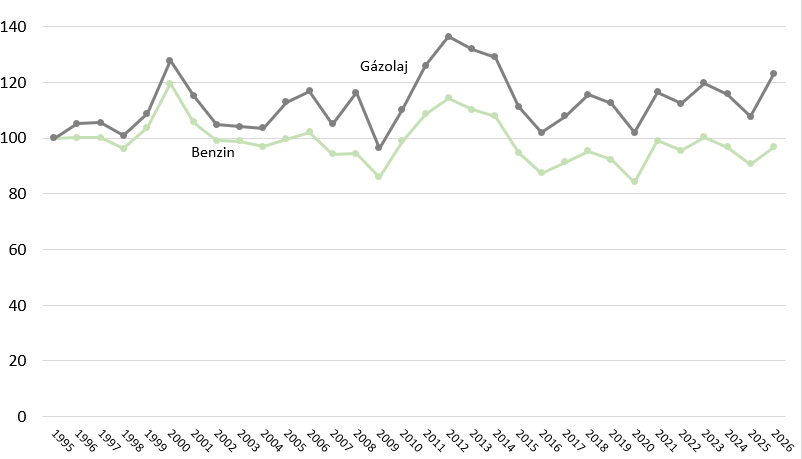
Government intervention in fuel prices is also unjustified because fuel prices have remained essentially unchanged in real terms since 1995, with minor fluctuations, while the average earnings increased by 180 percent. This means that today one can buy almost three times more petrol from an average income than 30 years ago. And the daily harmful consequences of increasing car use – such as air and noise pollution and congestion – can be felt every day.
On the occasion of the previous fuel price cap, the Clean Air Action Group listed 42 reasons why such a measure is wrong. At the same time, it made a concrete proposal to solve the situation: the money intended to cushion the impact of the price increase should be distributed equally among citizens (let them decide what to spend it on), and the market should be allowed to shape the price of fuel. In this way, not only can all the adverse environmental and economic effects of the price cap and tax cuts be avoided, but social inequalities would also be reduced.
Graph by Clean Air Action Group based on data from the Central Statistical Office (KSH)