What can be learned from Warsaw and Kraków about low emission zones
Warsaw and Kraków have launched the first two low emission zones in Poland. The capital (Warsaw) opted for a small central zone with broad public support. The southern city (Kraków) went for a much wider zone and is now navigating protests, court challenges, and a recall campaign against the mayor. Both deserve close attention from policymakers in Europe.
Two cities, two very different zones
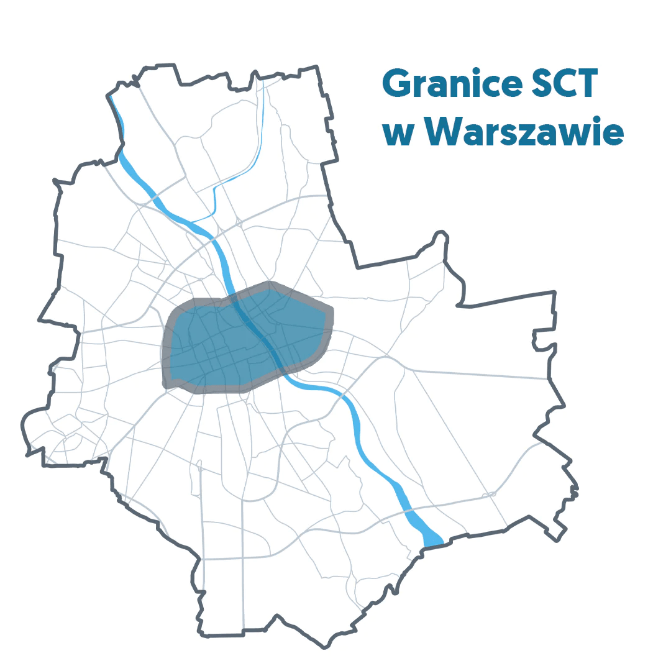
Warsaw's Strefa Czystego Transportu (SCT, in English: clean transport zone) was launched on 1 July 2024. It covers roughly seven per cent of the city, concentrated in the central district. Stage 1 bans pre-1997 petrol vehicles and pre-2005 diesels. Stage 2, beginning 1 January 2026, tightens those thresholds to pre-2000 petrol and pre-2009 diesel vehicles. Residents who pay local taxes inside the zone, along with anyone over 70, are exempt until the end of 2027. The fine for entering without a compliant vehicle goes up to 500 PLN (about 120 EUR).
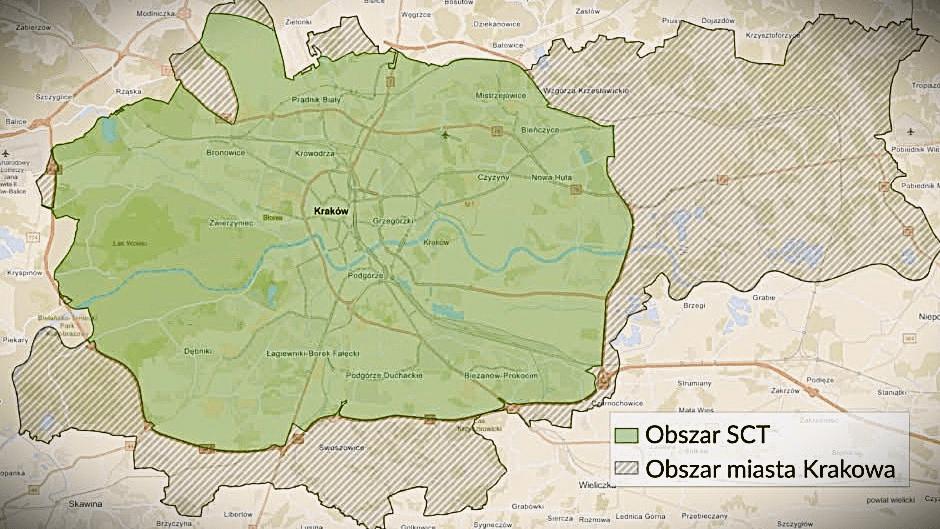
Kraków's zone is in a different league. It covers about sixty per cent of the city, the entire area inside the Fourth Ring Road. Petrol vehicles registered after 2004 and diesels registered after 2014 enter freely. Older vehicles pay on a sliding scale: 2.50 PLN (0.6 EUR) per hour, 5 PLN per day, or a monthly pass that starts at 100 PLN (24 EUR) in 2026, climbs to 250 PLN (60 EUR) in 2027, reaches 500 PLN (120 EUR) in 2028, and ends in a full ban from 2029. Kraków taxpayers who owned a non-compliant car before 26 June 2025 are exempt.
How it is enforced
Warsaw runs enforcement through the Municipal Police, who cross-check the observed plates against the national vehicle register (CEPiK). The city has also worked with the TRUE Initiative and the ICCT on roadside remote sensing, which uses cameras and emissions sensors to spot non-compliant vehicles at scale. Kraków uses an automatic number plate recognition (ANPR) camera network cross-referenced against CEPiK and plans to expand it to around 300 cameras. Fully automated fining is still waiting for national legislation, so enforcement in the early months has been intentionally lenient.
Why Warsaw landed softly and Kraków did not
Public reaction in the two cities looks almost inverted. In Warsaw, a December 2022 poll reported by Notes from Poland found that 87 per cent of residents wanted action on air quality and 76 per cent supported restricting polluting vehicles. A 2023 city survey put support at around 70 per cent, with 46 per cent of respondents saying the proposed zone was too small. The final compromise scaled the zone down to seven per cent of the city and exempted residents until 2028.
In Kraków the mood is sharper. Around half of Krakowians surveyed dislike the SCT, against roughly a quarter who approve. A protest gathered at City Hall on 10 January 2026. An MP from the opposition party called the zone a "tax on poverty". A court rejected legal challenges to the scheme in February 2026, but the political cost kept building. On 24 May 2026, Kraków residents voted to recall mayor Aleksander Miszalski in a rare municipal referendum. Turnout reached 29.99 per cent, just above the 26.98 per cent validity threshold, and 97 per cent of those who voted backed his removal. Exit polling pointed to the SCT as the single biggest driver: around 28 per cent of participants named it as their main reason for turning out, even though support for the zone in principle had sat near 64 per cent only a year earlier. Miszalski himself called the rollout a mistake during the campaign. Local civil society, including Kraków Smog Alert, is now pushing back against attempts to weaken the design under the incoming administration.
“Get residents on board first, then draw the line on the map.”
— Reading of the Warsaw versus Kraków rollouts
Is it actually working?
In Kraków, around 80 per cent of nitrogen oxide pollution comes from vehicle exhaust, so the policy is aimed squarely at the dominant source. In Warsaw, road traffic accounted for roughly 40 per cent of NOx and 51 per cent of PM10 in 2024, according to the IEEP policy brief on the Warsaw zone. Kraków's first weeks of enforcement produced 58 warnings and three fines, the intentional soft start running through April 2026. A full effectiveness study for the Warsaw zone is expected in early 2027.
The early signal across European low emission zones, summarised in coverage from Triple Pundit and other policy outlets, is that even modest zones nudge fleet turnover and shift behaviour at the margins. The gains are gradual rather than dramatic, but they accumulate as thresholds tighten on schedule.
What European cities could take from this
There are four working takeaways for any European city considering a similar tool.
First, sequence matters. Warsaw built broad public support before drawing the boundary and let that support shape the final design. Kraków drew a large boundary and tried to negotiate support afterwards. The May 2026 recall is the political cost of the second sequence, made visible.
Second, the exemption design carries most of the political risk. Kraków's wider zone catches many more daily drivers, including commuters from outside the city who do not vote in the mayoral election but do voice frustration that local residents pick up. A zone large enough to bite is also large enough to mobilise opposition.
Third, enforcement infrastructure should be in place before the zone goes live, not added later. Kraków is still waiting on national legislation to allow automated fines, which has limited deterrence in the early months. A camera network is only useful if the legal authority to act on it exists.
Fourth, the framing matters as much as the rules. "Clean transport zone" lands differently than "driving ban". Pairing the restriction with visible investment in alternatives (public transport, cycling, electrification of municipal fleets) makes the trade-off legible to residents who lose access. The Clean Cities Campaign has documented this pattern across the European cities that have moved earliest, and it shows up clearly in the Polish contrast as well.
Read the full brief
This post summarises a desk-research brief on the Warsaw and Kraków low emission zones prepared for Clean Air Action Group. The full report, with detailed timelines, enforcement specifics, and the underlying sources, is available here:
• Low Emission Zones in Poland: Warsaw and Kraków (full brief with timelines, enforcement design, public reaction, and sources) [Download]
Desk research and writing by Filip Kopta during a bachelor internship at Clean Air Action Group (Levegő Munkacsoport).